
 Axe ’Em, Jacks!
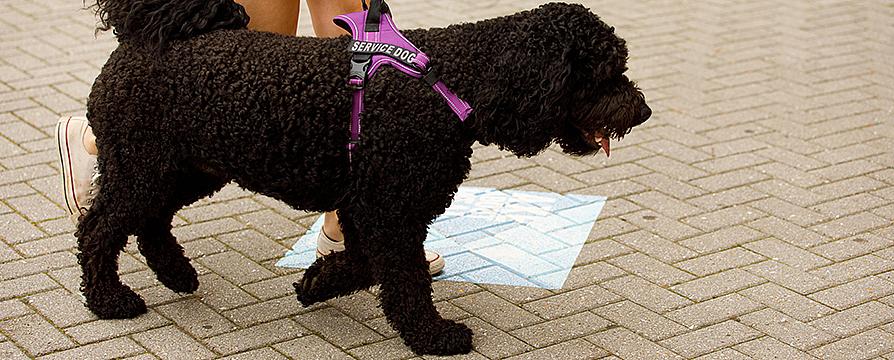
Service dogs are different than emotional support animals.
American Disabilities Act How “Service Animal” Is Defined:
"Service animals are defined as dogs that are individually trained to do work or perform tasks for people with disabilities. Examples of such work or tasks include guiding people who are blind, alerting people who are deaf, pulling a wheelchair, alerting and protecting a person who is having a seizure, reminding a person with mental illness to take prescribed medications, calming a person with Post Traumatic Stress Disorder (PTSD) during an anxiety attack, or performing other duties. Service animals are working animals, not pets. The work or task a dog has been trained to provide must be directly related to the person’s disability. Dogs whose sole function is to provide comfort or emotional support do not qualify as service animals under the ADA."
Service dogs are welcome
Service animals are welcome in all buildings on campus and may attend any class, meeting, or other event where animals would not typically be permitted.
We encourage you to give the Office of Disability Services advance notice of your service animal on campus to proactively address any potential logistical concerns with the dog's presence, particularly in classroom and laboratory environments.
Requirement to request accommodation
Students are not required to submit an accommodation request to bring a service dog into a university building, with the exception of residence halls.
Handlers must request accommodation before service dogs are permitted entry into residence halls. Submit the online general accommodation request to get started and include required documentation.
Appropriate inquiries regarding service provided
When it is not obvious what service the dog provides, you may be asked if the dog is a service animal required for a disability and the nature of the work or task the dog been trained to perform.
Prohibited inquiries
University employees may not ask about the person’s disability, require medical documentation, require certification of the dog’s training, or ask that the dog demonstrate its ability to perform the work or task.
Handler responsibilities
As the service dog handler, you are responsible for:
- the care supervision of the animal
- including regular feeding and exercise, grooming, flea control and health needs
- and must have full control of the animal at all times.
- compliance with all city and state laws, including:
- animal license requirements, vaccination, and identification tags.
- keeping the service animal leashed or harnessed, unless:
- your disability prohibits the use a leash/harness
- or these restraints would restrict the animal’s ability to properly assist you.
- relieving animals in designated locations, ensure immediate and proper disposal of animal waste.
- and keeping disruptive animal vocalization to an absolute minimum.
You are liable for any damages caused by the service animal.