
 Axe ’Em, Jacks!
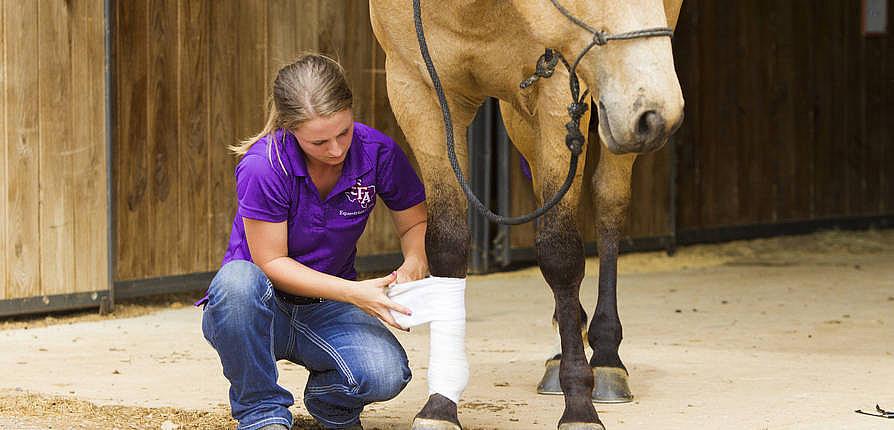
SFA follows the guidelines set forth by the U.S. Department of Agriculture and the Animal Welfare Act (see the Guide for the Care and Use of Laboratory Animals, Eighth Edition), which is enforced by the USDA, to protect certain animals from inhumane treatment and neglect. The regulations are followed with respect to the animals utilized by SFA, which include: agricultural animals, horses, fish, amphibians, and wildlife (birds, mammals, etc.) The IACUC committee recognizes that many of the animal care practices at SFA constitute routine animal care. The committee, therefore, acknowledges acceptable animal management and care practices and, upon approval of the IACUC chair, exempts them from further committee review.
Apply
Complete the application required for your research. Application must be submitted at least one week before the IACUC’s full board meeting.
Application status
Please allow up to 10 business days for the IACUC to complete a Designated Member Review. Full Committee Reviews meet the second Monday of every month.
Preparing your application
A good IACUC application prioritizes the well-being of the animals involved while enabling sound scientific research. It is comprehensive, transparent and demonstrates the investigator's commitment to ethical and responsible animal care and use. Conversely, a bad application often exhibits a lack of detail, insufficient justification and a potential disregard for minimizing animal pain and distress. Consider the following tips when preparing your application.
Good practices
A strong IACUC application demonstrates a clear understanding of the scientific question, the rationale for using animals and the commitment to minimizing animal pain and distress. The following are key characteristics of a good proposal.
Detailed and lay-friendly description
The proposal provides a concise overview of the project's purpose written in terms that are understandable to a non-scientist audience. It avoids excessive technical jargon.
Clear hypothesis and experimental design
The application states a testable hypothesis and details the experimental design, including treatment and control groups, group sizes (justified using statistical methods like power analysis, or citing relevant literature) and time points. A flowchart may be a useful tool to illustrate the experimental course of an animal from entry to study endpoint.
Strong justification for animal use
The proposal clearly explains why the study cannot be conducted using non-animal methods (e.g., cell cultures, computer models). It justifies the chosen species based on scientific rationale and the need to obtain relevant data. The use of the most appropriate and least sentient species capable of providing the data should be emphasized.
Adherence to the "Three Rs" (replacement, reduction, and refinement)
The proposal demonstrates consideration of the "Three Rs" to minimize animal involvement and discomfort.
- Replacement: The applicant considered non-animal alternatives and provided a scientific justification for not using them.
- Reduction: The proposal details how the minimum number of animals will be used to obtain valid results, possibly through methods like power analysis or citing prior research. Breeding colony planning is also important to ensure no excessive animals are produced and euthanized.
- Refinement: The application outlines measures taken to minimize animal discomfort, distress and pain consistent with scientific practices, such as using appropriate sedation, analgesia and anesthesia when needed. It specifies methods for monitoring animals, including clinical signs, possible side effects and adverse effects, with clear endpoints for removal and euthanasia.
Thorough animal care and monitoring
The proposal describes the living conditions of the animals, routine animal husbandry activities and how these conditions are appropriate for the species. It also details surgical procedures (if applicable), including post-surgical care and observation. Procedures producing pain or distress unrelieved by analgesics, if any, are explained and justified.
Practices to avoid
A deficient IACUC application often lacks clarity, justification or a strong commitment to animal welfare. The following are common pitfalls.
Insufficient detail on animal procedures
The proposal includes long statements about the research's relevance but provides inadequate detail about the actual procedures performed on the animals. For instance, describing surgical procedures without outlining post-surgical care and monitoring is a common pitfall.
Poor justification for animal numbers and species
The applicant fails to justify the number of animals or the choice of species, potentially suggesting that animal numbers are based on how many experiments can be completed rather than the minimum required for valid results. There's no clear rationale for selecting a particular animal model.
Neglecting alternatives
The proposal does not adequately discuss how alternatives to animal use were considered, or it fails to justify the continued need for live animals.
Insufficient pain and distress management
The application lacks a detailed plan for alleviating pain or distress, such as failing to provide adequate descriptions of anesthesia or analgesia use. Procedures classified as causing unrelieved pain or distress are not properly explained and justified.
Lack of clarity in experimental design
The hypothesis is not clearly stated, or the experimental design is vague, making it difficult for the IACUC to assess the scientific merit and necessity of the animal use.
Inadequate monitoring and euthanasia plan
The application fails to describe how animals will be monitored for pain and distress, the criteria for removal from the study, or the methods of euthanasia.
Insufficient training documentation
The proposal doesn't provide adequate documentation of personnel training in animal care and use procedures.