
 Axe ’Em, Jacks!
The most valuable job skill
In business and in life, you need to know the landscape to get ahead: the market, the players, the events that shaped them and where it’s all headed. Knowing how to study a scene or a culture, pick out the important details and draw useful conclusions is an immeasurably valuable skill.
The study of history has been valued as a part of classical education since the Middle Ages because knowledge of history is knowledge of people – their wants, needs, motivations and the consequences of their actions. From cautionary tales to inspirational legends, the past gives us context for the present and tells us what might happen in the future.
Skills like these allow history majors to thrive in a variety of careers, including
- education
- International business
- law
- museums, archives and monuments
- politics and public service.
No matter what area of history you might specialize in during your education, the skills you learn at SFA will be adaptable to a wide variety of careers.
What kinds of jobs can I get with a history degree?
About half of all SFA’s history students become history and social studies teachers at the middle and high school levels. Our excellent education program gives those students vital hands-on experience in the classroom before going on to teach in schools all across the state of Texas.
Many of our students also go on to business and law school. Their worldly, global perspective is valuable not only to large corporations, but increasingly to small local businesses operating internationally thanks to the power of the internet.
Undergraduate and graduate students may take their public history coursework and experiences working at the many historical venues in and around Nacogdoches to the next level, continuing their work at museums, parks, monuments, archives and historical societies across the country.
Job availability and growth
According to the U.S. Bureau of Labor Statistics:
High school teachers:
“Employment of high school teachers is projected to grow six percent from 2014 to 2024, about as fast as the average for all occupations. Overall growth is expected to be affected by larger class sizes and enrollment rate. Employment growth will vary by region.”
The median annual wage for high school teachers was $58,030 in May 2016.
Historians:
“Employment of historians is projected to grow two percent from 2014 to 2024, slower than the average for all occupations. Competition for jobs may be very strong because there are a small number of positions relative to the number of people seeking jobs in the field.”
The median annual wage for historians was $55,110 in May 2016.
Archivists, curators and museum workers:
“Employment of archivists, curators, museum technicians and conservators is projected to grow seven percent from 2014 to 2024, about as fast as the average for all occupations. The need to store information in archives and public interest in science art and history will continue to spur demand for archivists, curators, museum technicians and conservators. Applicants should expect very strong competition for jobs.”
The median annual wage for archivists, curators and museum workers was $47,230 in May 2016.
History degrees in action
Lumberjacks who study history have bright futures. Our graduates go on to become high school teachers and college professors. Some go on to graduate school. When you study history, the career possibilities are nearly limitless.
Want to know what history can do for your future? Check out what some of our graduates are doing with their history degrees.
Kendall Gay, Class of ‘17
Director, Texas Forestry Museum
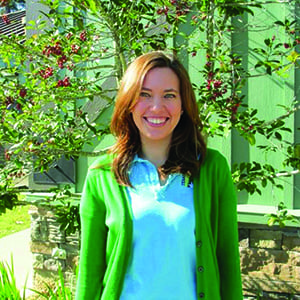
Kendall earned a bachelor’s degree in history, but when she decided to pursue a career with the Texas Forestry Museum, she decided to enroll in SFA’s public history graduate program. Kendall’s graduate work gave her the skills needed for her current role as director of the Texas Forestry Museum.
Kendall says the program’s volunteer component allowed her to experience the day-to-day responsibilities and the unique challenges – such as staffing and financial constraints – of working for a museum. Being able to volunteer in existing history establishments was one of Kendall’s most valuable experiences in the graduate program.
Jake McAdams, Class of ‘13
Regional Project Manager, Public Management, Inc.

Jake earned his master’s degree in public history from SFA in 2013. He puts his education to great use as Public Management, Inc.’s regional project manager for the North Texas area, where he has managed infrastructure, housing and park projects worth more than $5 million since 2014. Jake says that his studies at SFA prepared him to deal with the confluence of the built, social and cultural environments, as well as how to solve small communities' problems.