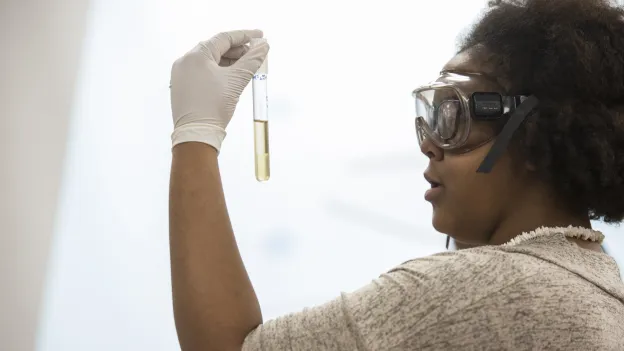
This concentration is offered within the Bachelor of Science in biology program.
Life at the molecular level
Your career starts with understanding the building blocks of life. Prepare for impactful roles in medicine, research or education by exploring the inner workings of cells and molecules. Your focus will go through the investigation of microscopic details that drive human development and disease.
Cell-ebrate your potential
Don't just study science. Use your curiosity to map out a path in medical research, biotechnology or education. Expect to dive deep into genome sequencing, DNA replication and cell signaling. Hands-on discovery happens here because professors open their high-tech labs to you from your very first year.
This degree acts as a powerful launching pad for medical school, graduate research or professional opportunities. Regardless of the path you take, you’ll leave the undergraduate classroom ready to head straight into high-tech labs.
Program Highlights

Requirements for admission to SFA
All applicants must meet the undergraduate admission requirements. Select the option that best describes you:
- First-year student (have never enrolled in college)
- Transfer student (have enrolled in college)
- All other applicants
Ready to complete your application?
Undergraduate applications are accepted online. Apply using ApplyTexas or Common App. Both are fine, just only submit one.
Apply with ApplyTexas Apply with Common App
Priority deadlines
SFA has rolling admissions. That means you can apply to the university anytime. Although, applying early has financial and housing benefits. Make sure to check with your specific department! Some programs need extra paperwork by a certain date to consider you for the upcoming semester.

Related News
Related Events
Questions?
Get in touch! We're here to help.
Department of Biology
Miller Science Building, Suite 101