
 Axe ’Em, Jacks!
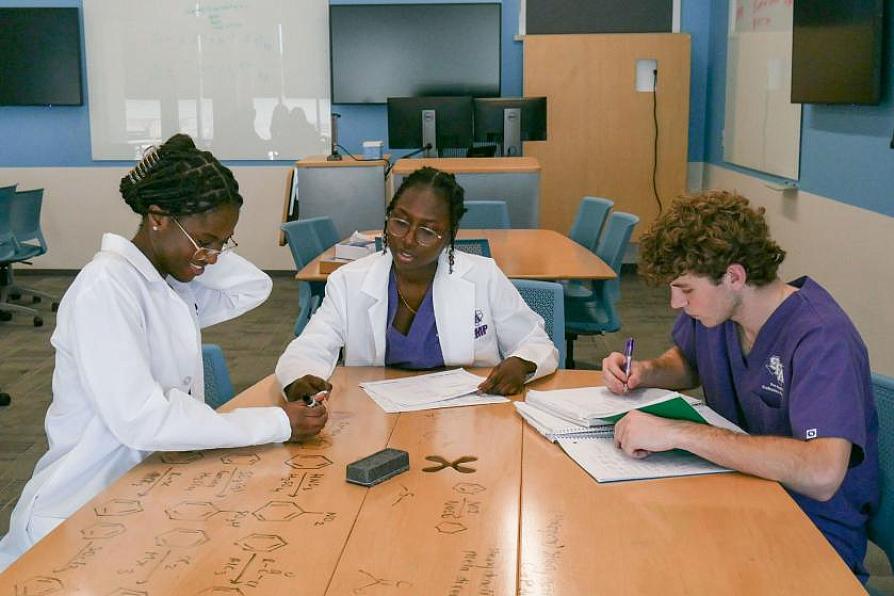
The dissertation should be an independent and original study. That does not mean it must treat a subject never before considered but rather that it should treat the subject in an original way. The dissertation is derived from original research — i.e., laboratory, field or library — and must be prepared under the guidance of a dissertation chair and advisory committee. The dissertation must be acceptable in both content and expression and must be presented in a format consistent with the discipline as defined by the program and the advisory committee.
Policies and Procedures
In the process of developing a dissertation, it is the responsibility of the graduate student to follow the guidelines below.
Dissertation Advisory Committee
The initial step in establishing an advisory committee is to select a dissertation chair who must be a member of the doctoral student’s degree program and/or department. Next, with the advice of this person, a dissertation topic should be selected as soon as possible. Following completion of these two steps, the balance of the committee can be formed.
The committee is to be composed of four total members: a chair, at least two other members, and one member outside of the program, with all holding graduate faculty membership at SFA.
Dissertation Proposal
Under the supervision of the dissertation chair, a graduate student prepares a dissertation proposal that is submitted through the InfoReady Submission Portal. The completed proposal application is then automatically routed to the thesis director, advisory committee members, the academic unit head, the academic dean and lastly to the Dean of the Office of Research and Graduate Studies.
The proposal must be submitted no later than the semester prior to the semester of intended graduation.
Any research proposal that uses human participants, laboratory animals or hazardous materials must be accompanied by a memorandum of approval from the chair of the appropriate university committee. These committees are as follows:
- the Institutional Review Board for the Protection of Human Subjects in Research
- the Institutional Animal Care and Use Committee
- and the Institutional Biosafety Committee.
Registration for Dissertation
A graduate student preparing a dissertation enrolls first in the appropriate dissertation course. Following the initial enrollment in dissertation and until the dissertation defense is held, a student must continue to register each semester during which the resources of the university (faculty, library, laboratories, etc.) are utilized for the dissertation research.
Until the dissertation is completed, a grade of WH (withheld) is given for each section of dissertation in which the student was enrolled. When the final copy of the dissertation has been approved and signed by the advisory committee, it is the responsibility of the dissertation chair to submit grades for all dissertation courses.
Exceptions to continuous enrollment may be made in select cases. These exceptions must be approved by the dissertation chair, academic unit head, college dean and dean of Graduate Studies.
Supervision of Dissertation Research and Writing
The graduate student conducts the dissertation research and writes the dissertation under the supervision of the dissertation chair and the dissertation committee.
Dissertation Draft
A dissertation draft may serve as the basis for the dissertation examination. The dissertation draft must meet the following requirements:
- Must be mechanically correct
- Figures, plates and tables must be in final form, but photographs may be high-quality reproductions
- Must be approved for content by all members of the committee
The graduate student must include a completed draft of the dissertation when filing the InfoReady Submission Portal application for the dissertation examination with the Office of Research and Graduate Studies.
Dissertation Examination
The application for dissertation examination form must be submitted to the InfoReady Submission Portal with the draft of the dissertation and follow the same procedures as described above for the dissertation proposal. The InfoReady application must be filed with the Office of Research and Graduate Studies at least one week before the defense and no later than four weeks before the day of commencement. The academic unit and college may require earlier submission than the dates provided by the Office of Research and Graduate Studies. (See Important Dates.)
Upon completing the InfoReady Dissertation Examination application, each member of the dissertation examination committee, the department chair, college dean, and the Dean of the Office of Research and Graduate Studies will receive a copy of the dissertation to review. Applications must be submitted at least 1 week prior to examination so that all parties have ample time to review and approve the dissertation.
The dissertation defense is held at a time and place agreed upon by the graduate student and all members of the committee. If the committee requires changes or additions to the dissertation more extensive than just improvements in language, punctuation, format or illustrations, approval of the dissertation may be delayed until each committee member has a chance to examine a new draft with incorporated changes.
Report of Dissertation Defense
Following the dissertation examination, the Office of Graduate Studies will send a Report of Dissertation Exam dynamic form to the thesis director. The Report of Dissertation Examination dynamic form will route to each committee member, the department chair, and the college dean for final approval.
Final Corrections, Approval and Signatures
Following the dissertation examination, all changes and corrections required by the dissertation committee and the Office of Research and Graduate Studies must be incorporated into the final draft. The graduate student or the dissertation chair then submits the revised dissertation to ORGS via email at thesesanddiss@sfasu.edu for approval. The final product must be uploaded into ScholarWorks pending final approval by the Office of Research and Graduate Studies.
Dissertation Proposal and Final Manuscript Preparation Guidelines
Dissertation proposals and final manuscripts are the completed documents approved by the dissertation committee and the Dean of the Office of Research and Graduate Studies. Therefore, the proposal and manuscript must be of the highest possible quality with respect to content and presentation.
The student bears the primary responsibility for quality but must realize that each member of the dissertation committee also bears responsibility and is not obligated to approve the manuscript until satisfied with the overall quality.
The student should thoroughly proofread all pages to ensure all mechanical specifications have been met. Failure to meet specifications may result in the manuscript being returned for correction, thereby causing the expenditure of additional time and money that could otherwise be avoided.
Mechanical Specifications
Form c contains a template for spacing, margins, headings and page number locations.
Type
Times New Roman or Arial 12-point font is preferred. Where necessary, smaller type may be used in figures and tables but never less than an eight-point font.
Pagination
For preliminary pages, such as the table of contents, list of figures, tables and abstract, lowercase Roman numerals must be placed in the center, 1 inch from the bottom edge of the page. For the text of the dissertation, Arabic numerals should be centered 1 inch from the bottom edge of the page (see sample form c).
Spacing
Text must be double-spaced. Footnotes, captions, figures and appendix materials should be single-spaced. In the bibliography/references section, citations should follow the formatting requirements of the style manual used (e.g., MLA, APA, Chicago).
Margins
All pages of the dissertation must have the following margins: 1 inch on the right and 1 1/2 inches on the bottom, left and top.
For pages with a primary heading, the top margin should be 2 inches (see sample forms c and d). The first line of each paragraph and footnote should be indented five spaces from the left margin. Equations, formulas and other such notations should be centered.
Headings
Major divisions of the dissertation (e.g. introduction, bibliography and appendix) require primary headings and must begin on a new page. Primary headings are centered 2 inches from the top edge of the page and typed in all capital letters. Body of dissertation should be appropriately formatted according to chosen style manual, such as APA, MLA, Chicago/Turabian, etc. Headings and subheadings are consistently formatted throughout the document. A subheading at the bottom of the page must have at least one line of text beneath it. Otherwise, the subheading may be moved to the next page.
Tables and Figures
Tables and figures must appear in the text as near as possible to the discussion relating to them. Under no circumstance may a table or figure precede the first discussion of its content (exception: tables in appendices). Tables and figures should not be inserted in the middle of a sentence. They must be numbered consecutively and include a caption that concisely describes their content. Captions must be placed above a table and below a figure.
Tables and figures must fit within the required margins; page orientation may be changed to landscape when necessary, with the top of the page positioned at the binding (left) side. Tables should be cleanly formatted, using the minimum number of horizontal and vertical lines needed to separate main elements. If a table spans multiple pages, the word (continued) must appear on the last line of the table before the page break—this applies to every page where a break
occurs. When a table continues onto subsequent pages, the table’s headings must repeat at the top of each new page.
The Table of Contents, List of Figures, and List of Tables must be generated using the automatic Table of Contents and Table of Figures tools located in the References tab of Microsoft Word. For students using Google Docs, these elements must be created using Google Docs’ built‑in automatic Table of Contents and Table of Figures features. Manually created lists are not permitted.
Reference Citations
Style and manner of reference citation and bibliographic format are determined by academic discipline. The style manual or journal used must be acceptable to the discipline and stated on the bottom of the vita page preceding the identification of the typist (see sample form d).
Although style manuals will govern the way electronic sources should be cited, citations from web-based resources raise special concerns due to the transitory nature of the data. While electronic versions of scholarly articles appearing also in print or refereed electronic journals may be expected to persist in online form, the same is not true of conventional web sources. Take this into account by including copies of cited text in an appendix for review by the dissertation committee. Sufficient material should be provided to enable the dissertation committee to determine whether the sources have been used appropriately.
In cases where conventional web sources form a significant foundation for a dissertation, consideration should be given to binding the appendix with the dissertation to the extent this can be done without violating copyright.
Parts of the Dissertation
The dissertation should be arranged as follows:
- Flyleaf - a blank page for protection in binding
- Title page - conventional page showing essential bibliographical information
- Signature page - a formal record of approval
- Abstract - An abstract is required by the Office of Research and Graduate Studies. It should be comprised of a brief, concise description of the problem, methods of approach, salient results obtained, and conclusions and their significance. The abstract will be published in Thesis/Dissertation Abstracts and therefore will largely determine who utilizes the dissertation in the future.
- Acknowledgements - optional
- Table of contents - a paginated guide or outline listing primary, secondary and tertiary headings
- List of figures - a paginated listing of all figure captions as they appear with the figures they accompany; used only when dissertation contains figures
- List of tables - format same as table of contents; used only when dissertation contains tables
- Text - the main body of the dissertation
- References - depending on the style used, also may be labeled References, References Cited, or Literature Cited; format must be consistent with style followed throughout the dissertation
- Appendix - optional
- Vita - a brief, autobiographical sketch emphasizing the student's educational and professional experience; dissertation typist and style manual are identified at the bottom of the page.
For questions concerning the mechanical content or presentation format of the dissertation not addressed in this guide, consult the Office of Research and Graduate Studies before proceeding.